We may earn a commission when you buy through links on this page. As an Amazon Associate we earn from qualifying purchases. How we make money.
Quick answer
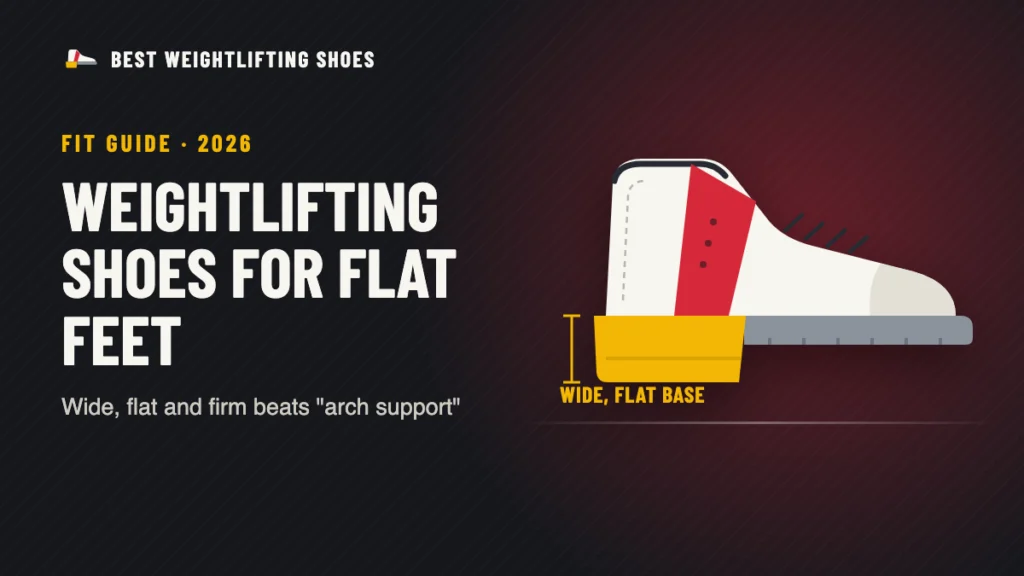
With flat feet, look for a wide, flat outsole, a firm non-compressible heel and enough forefoot room rather than a big arch. Good fits: TYR L-1 (wide toe box), Nike Romaleos 4 (wide, flat base), Reebok Legacy Lifter III (roomy, neutral). Budget: Nike Savaleos.
Quick honest note first. I’m not a doctor, and if your feet hurt when you lift, a podiatrist or physio is a better first stop than a new pair of shoes. What I can do is point you to the lifters whose specs and owner reports line up with what flat-footed lifters tend to need.
What actually matters with flat feet
- A wide, flat platform. More contact with the floor means more stability when your arch collapses a bit under load.
- A firm heel. Lifters use non-compressible heels, which is already a plus compared with cushioned trainers.
- Forefoot room. Flat feet often go with a wider forefoot. A cramped toe box makes balance worse.
- Neutral, not built-up, arches. Lifting shoes generally don’t have big arch supports. If you use custom insoles, take them shopping and make sure they fit.
Wide forefoot
TYR L-1 Lifter
Extra-wide toe box and a broad, flat sole.
Most stable
Nike Romaleos 4
Wide, planted base and two straps.
Budget
Nike Savaleos
Roomy toe box at a friendly price.
| Shoe | Heel height | Closure | Best for | Typical price |
|---|---|---|---|---|
| TYR L-1 Lifter | 21 mm (0.83") | Laces + 2 straps | Wide feet, Olympic lifts | $200–220 |
| Nike Romaleos 4 | 20 mm (0.79") | Laces + 2 straps | Olympic lifts, heavy squats | $200–230 |
| Reebok Legacy Lifter III | 20.5–22 mm* | Laces + strap | Olympic lifts, tall lifters | $200–230 |
| Nike Savaleos | 15–15.5 mm* | Laces + 1 strap | Beginners, budget | $90–125 |
| Adidas Adipower 3 | 20–22 mm* | Laces + 1 strap | Olympic lifts, lifters with flat feet | $200–230 |
Best for wide, flat feet
TYR L-1 Lifter
- Heel height21 mm (0.83")
- ClosureLaces + 2 straps
- FitExtra-wide toe box, flat wide sole
- Best forWide feet, Olympic lifts
The L-1 is built for exactly the foot shape many flat-footed lifters have: wide up front. The broad, flat sole puts more of your foot on the floor and the two straps stop the extra room from turning into slop.
Pros
- Extra-wide toe box
- Flat, broad sole
Cons
- Loose on narrow feet
Most stable
Nike Romaleos 4
- Heel height20 mm (0.79")
- Weight~19 oz (US 10.5)
- ClosureLaces + 2 straps
- FitWide, flat base; true to size for most
- Best forOlympic lifts, heavy squats
The Romaleos 4’s wide, flat outsole is a big reason it rates so well for stability. If your arches flatten under heavy squats, that broad base helps you stay balanced.
Pros
- Very wide, flat base
- Firm heel
Cons
- Heavy and pricey
Roomy and neutral
Reebok Legacy Lifter III
- Heel height20.5–22 mm
- ClosureLaces + strap
- FitRoomy
- Best forOlympic lifts, tall lifters
Reviewers describe the Legacy Lifter as roomy with a neutral footbed, which suits lifters who want to add their own insoles. The heel is on the tall side.
Pros
- Roomy fit
- Neutral footbed
Cons
- Tall heel isn’t for everyone
What about the Adidas Adipower 3? Some lists recommend it for flat feet, but Adidas customer reviews mostly describe it suiting higher arches and running slightly narrow in the toe box. Try it on before you commit.
Our verdict
Prioritize width and a flat base.
Wide forefoot: TYR L-1. Want the most stable platform: Romaleos 4. On a budget: Savaleos. If lifting causes foot pain, get it checked before buying any shoe.
FAQ
Are weightlifting shoes good for flat feet?
They can be. Lifters have firm, non-compressible heels and flat outsoles, which many flat-footed lifters find more stable than soft trainers.
Do weightlifting shoes have arch support?
Generally only a little. Most lifters have fairly neutral footbeds. If you need more support, check that your insoles fit inside the shoe.
Should flat-footed lifters avoid lifting shoes?
Not necessarily. Focus on fit: a wide, flat base and enough room for your forefoot. If you have pain, talk to a podiatrist.